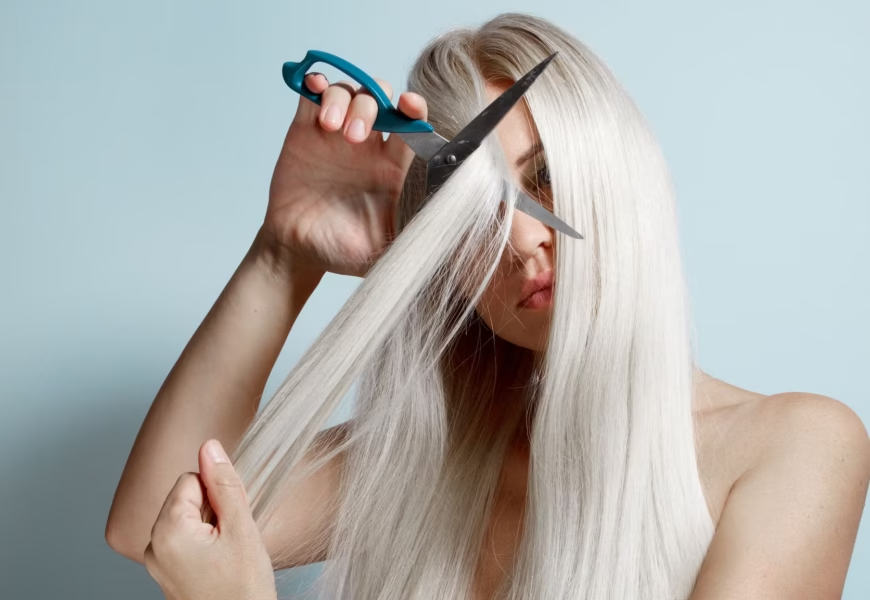
Most people book a salon appointment when they want a trim or a new look. But some prefer to grab the scissors themselves, stand in front of the mirror, and take matters into their own hands.
At first glance, it might seem like a simple act of convenience or curiosity. However, behavioral psychology suggests that the decision to cut your own hair can reveal deeper aspects of your emotions, personality, and current state of mind.
Let’s explore what it might really mean when someone decides to take the scissors into their own hands.
1. A Desire for Control During Emotional Uncertainty
One of the most common psychological reasons people cut their own hair is a need to regain control.
When life feels chaotic — whether it’s a breakup, job stress, or emotional overload — changing your appearance can feel empowering. It’s one of the few things you can control instantly.
Psychologists call this a coping mechanism — a way for the mind to reassert order when external circumstances feel unpredictable. Cutting your hair becomes symbolic: “I may not control everything, but I can control this.”
2. A Form of Emotional Release or Transformation
Behavioral experts often describe self-haircutting as a ritual of release.
It’s not just about hair — it’s about letting go of old versions of yourself. People often do this after major emotional experiences like heartbreak, grief, or personal transitions.
In this context, cutting your hair can represent a fresh start — a physical action that mirrors internal change. It’s the body’s way of saying, “I’m ready to move on.”
3. A Sign of Independence and Self-Reliance
Some people cut their own hair not out of stress, but out of confidence and independence.
Behavioral psychology links this to a high sense of autonomy — the belief that you can take care of yourself without relying on others for approval or validation.
For these individuals, the act isn’t impulsive but empowering. It’s a quiet declaration of, “I know what I want, and I can do it myself.”
4. Impulsive Behavior Linked to Emotional Reactivity
On the other hand, if the haircut happens suddenly — especially during emotional distress — it may reflect impulsive behavior.
Psychologists associate impulsivity with acting on strong emotions before thinking through the consequences. For example, someone might cut their hair at midnight after an argument or during anxiety because it provides immediate relief or distraction.
While this act can feel cathartic in the moment, it sometimes signals deeper emotional tension that’s looking for release.
5. A Symbol of Rebellion or Nonconformity
In some cases, cutting your own hair can be an act of self-expression and rebellion.
People who reject conventional beauty standards or societal norms might view salons as symbols of conformity — and prefer to express their individuality through a DIY haircut.
From a behavioral perspective, this can be tied to high openness and creativity — traits found in people who thrive on authenticity rather than approval.
6. A Reflection of Low Trust or Negative Past Experiences
Sometimes, people choose to cut their own hair because they’ve had bad experiences with hairstylists or simply don’t trust others to get it right.
Psychologically, this may indicate a guarded personality type — someone who prefers to maintain control rather than risk disappointment.
It’s less about the hair itself and more about avoiding vulnerability or potential frustration.
7. A Creative and Experimental Personality
Cutting your own hair can also be a sign of a creative spirit.
Behavioral psychologists note that people who enjoy experimenting with their looks are often high in openness to experience — one of the “Big Five” personality traits.
These individuals see change as exciting rather than intimidating. For them, a haircut isn’t a risk — it’s an artistic expression.
8. A Temporary Mood Regulator
Just as some people redecorate, bake, or clean when they’re stressed, cutting hair can serve as a temporary emotional regulator.
The focus, physical movement, and visual transformation provide instant feedback to the brain, which can feel soothing or rewarding.
Psychologically, this activates the brain’s reward system, making the person feel calmer and more in control — at least for a little while.
9. A Sign of Minimalism or Practical Thinking
Not all self-haircuts are emotional. Some people do it simply because it’s practical, cost-effective, or time-saving.
Behavioral analysis shows that people with minimalist or utilitarian mindsets often value efficiency over perfection.
For them, the act reflects logical thinking and independence rather than emotional reaction.
10. An Indicator of Change-Seeking Behavior
At its core, cutting your own hair often represents a desire for change — whether emotional, psychological, or situational.
It’s a way of signaling that something within you is evolving. Even if the change starts with appearance, it often hints at deeper transformation happening inside.
Final Thoughts
Cutting your own hair isn’t always a simple beauty decision — it’s a behavior with psychological depth.
It can mean you’re craving control, expressing independence, processing emotions, or simply exploring your creativity.
Behavioral psychology reminds us that these small acts often reflect what’s happening beneath the surface. Whether it’s a quiet act of self-care or a bold declaration of change, one thing is clear — hair often grows back, but emotional clarity stays.